
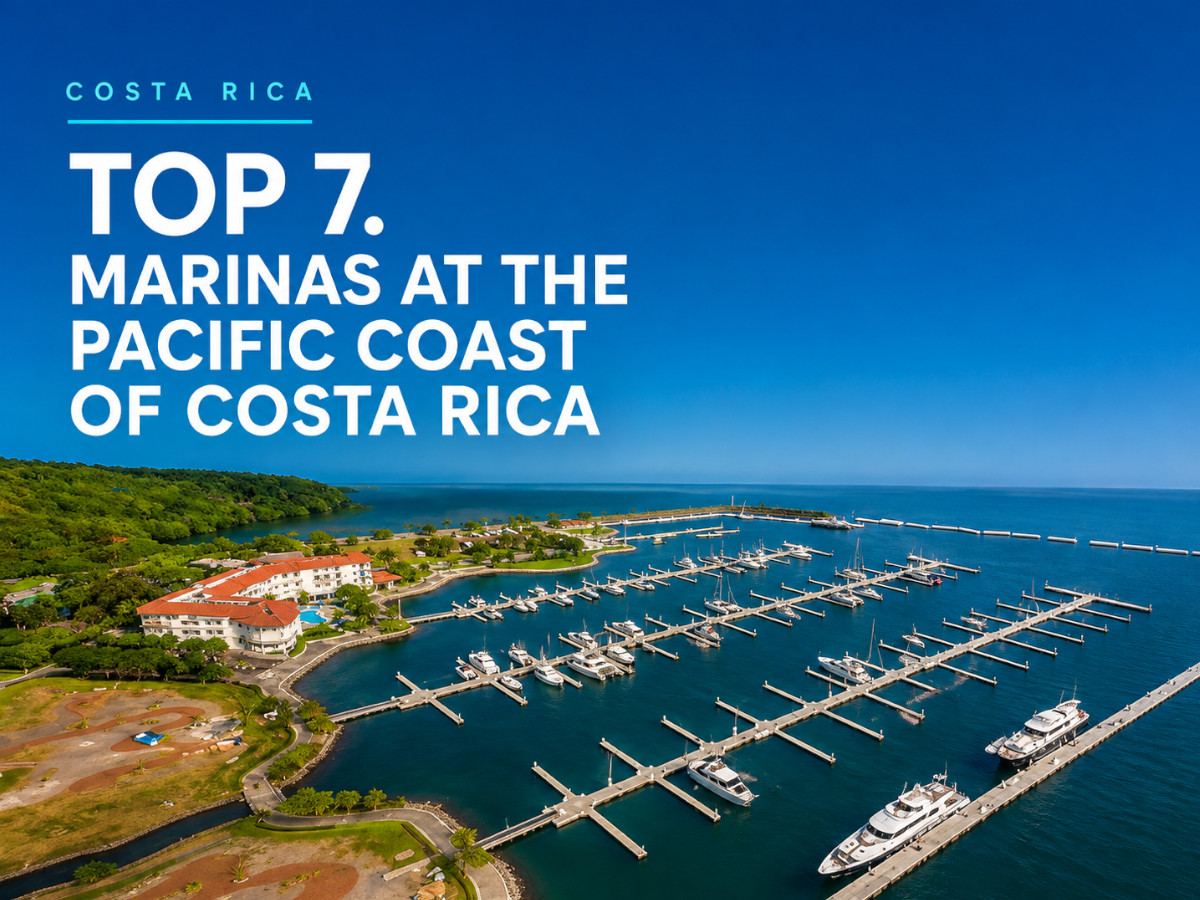
Costa Rica Marinas: A Complete Guide to the Pacific Coast
Costa Rica’s Pacific coast has developed an impressive network of marinas, ranging from exclusive superyacht facilities in Guanacaste to small, practical marinas serving local boat owners and cruising sailors.
But there is no single “best marina in Costa Rica.”
The right one depends on what you want to do, where you are staying, and what kind of boat you are looking for. Guanacaste generally offers the largest selection of sailboats and catamarans, while Quepos and Golfito are particularly important for sportfishing. Some marinas are destinations in themselves, while others are simply practical places to fuel, provision, repair or safely keep a boat.
As Costa Rican boaters, we look at marinas a little differently. A beautiful building is nice, but when you arrive by boat, things such as fuel, ice, electricity, security and reliable marine services become much more important.
This guide looks at the main marinas along Costa Rica’s Pacific coast from north to south, both for travelers looking for a private boat charter and for boat owners navigating Costa Rican waters.
Marina Papagayo , Península Papagayo, Guanacaste
Marina Papagayo sits at the luxury end of Costa Rica’s boating scene.
Located within the exclusive Peninsula Papagayo resort development, this is the marina we associate most closely with large yachts and superyachts visiting Costa Rica.
The experience here is very different from arriving at a small fishing marina. Papagayo is designed as an upscale nautical destination, with the marina integrated into one of Costa Rica’s most exclusive resort areas.
For travelers staying around Peninsula Papagayo, it is a natural departure point for private yacht charters and exploring the coastline of northern Guanacaste.
The surrounding waters are also particularly interesting for sailing. Northern Guanacaste generally experiences more consistent winds than the southern Pacific, which is one reason a large proportion of Costa Rica’s sailing yachts and catamarans are based in this region.
Best for: luxury yacht charters, larger yachts, resort guests and travelers exploring northern Guanacaste.
Marina Flamingo, Playa Flamingo, Guanacaste
Marina Flamingo provides a different experience.
While still a modern, high-quality marina, we see Flamingo as a more accessible recreational boating hub than Papagayo.
Its location makes it particularly convenient for travelers staying around Flamingo, Potrero, Tamarindo, Las Catalinas and surrounding areas of Guanacaste.
This part of Costa Rica has one of the country’s largest selections of catamarans, sailboats, fishing boats and private charter vessels. For that reason, travelers looking specifically for a sailing or catamaran experience will often find more options in Guanacaste than farther south.
The coastline is also well suited to day charters, with numerous bays, beaches and coastal destinations within reach.
Best for: catamaran charters, sailing, private day trips, fishing and travelers staying in the Flamingo–Tamarindo region.
Ocean Marina , Puntarenas
Ocean Marina is considerably smaller and more functional than Costa Rica’s large resort marinas.
Located in the city of Puntarenas beside the Lito Pérez football stadium, it provides wet and dry storage, security, electricity and parking, including dry storage for smaller boats.
One advantage is secure parking. For local boat owners, being able to leave both the boat and vehicle in a controlled facility for several days can be extremely useful.
Its location in Puntarenas also provides another advantage that tourists may not immediately recognize: access to marine mechanics and repair services.
Puntarenas has historically been one of Costa Rica’s most important fishing cities. As a result, there are mechanics, workshops and some marine parts available in the surrounding area. If we had a boat with a mechanical problem and needed to choose a city in Costa Rica to look for help, Puntarenas would be high on our list.
However, we would consider Ocean Marina primarily a practical marina rather than a destination marina. Its immediate urban surroundings are not the reason we would recommend visiting Puntarenas by boat.
Best for: smaller boats, secure storage, access to Puntarenas marine services and boat owners who value practicality over a resort experience.
Puerto Azul Marina , Puntarenas
Also in Puntarenas is Puerto Azul Marina, which offers a noticeably different environment.
The marina forms part of Puerto Azul Hotel & Club Náutico and sits within the protected waters of the Puntarenas estuary. It has wet slips as well as limited dry storage for smaller vessels.
Unlike Ocean Marina, Puerto Azul combines the marina with hotel facilities, restaurant, swimming pools and other amenities, making it more suitable for boaters who want to spend some time ashore without leaving the property.
Its position also provides relatively convenient access to the Gulf of Nicoya.
The Gulf contains islands, beaches and fishing areas that make Puntarenas an interesting jumping-off point for boating, even though it receives considerably less attention from international charter travelers than Guanacaste, Los Sueños or Quepos.
Best for: Gulf of Nicoya access, smaller recreational boats, overnight stays and boaters wanting hotel facilities alongside the marina.
Los Sueños Marina , Herradura
Los Sueños is one of the names most closely associated with sportfishing in Costa Rica.
Located in Herradura Bay on the Central Pacific coast, the marina is part of the larger Los Sueños Resort development and has long been an important base for offshore fishing boats.
For many years, we kept our own boat anchored outside the marina and would enter Los Sueños to refuel. That experience also taught us something useful about boating in Costa Rica: you do not necessarily have to keep your boat inside a marina to make use of some marina services.
Los Sueños itself is relatively compact. There are dining options and resort services, but we would primarily choose this marina because of its boating infrastructure, fishing fleet and strategic Central Pacific location rather than for a large marina village experience.
For sportfishing, however, Herradura is difficult to ignore. Its fleet and history have made it one of the most established fishing bases in the country.
Best for: sportfishing, Central Pacific charters, resort guests and experienced anglers.
Marina Pez Vela: A Strategic Hub on Costa Rica’s Central Pacific
If we had to choose one of Costa Rica’s most strategically located marinas, Marina Pez Vela would be a strong candidate.
Located in Quepos, between Costa Rica’s Central and Southern Pacific regions, the marina provides convenient access to an extensive and remarkably diverse stretch of coastline. It is a natural departure point for exploring Manuel Antonio, nearby beaches and the waters extending south toward Uvita and beyond.
We have been visiting Marina Pez Vela for many years through our relationship with Oceans Unlimited, the dive center based at the marina. This has allowed us to observe its development firsthand, and its transformation has been impressive.
What was once a marina with only a small selection of restaurants has gradually become a substantial waterfront destination. Today, it combines a significant number of vessels with restaurants, shops, marine services, diving and tour operators, medical services, a bank and other businesses. A large new parking area has also been completed, while additional stores and commercial spaces continue to open.
The marina’s latest expansion includes the development of 40 new oceanfront villas with two- and three-bedroom residences. Announced amenities include a rooftop swimming pool, gym, children’s club, game room and private theater. Together with the growing commercial area, this development shows that Marina Pez Vela is evolving into much more than a place to dock or service a boat.
One of the things we appreciate is that the marina remains open and welcoming to the local community and Costa Rican visitors. During our most recent visit, local residents were enjoying the restaurants and public spaces alongside international travelers and boat owners. The atmosphere felt active but not overcrowded. Despite becoming increasingly polished and sophisticated, the marina does not feel completely separated from Quepos.
For anglers, Quepos remains one of Costa Rica’s most important sportfishing destinations, with access to productive offshore waters and a large charter fleet. However, fishing is only part of what Marina Pez Vela offers. Private day cruises, coastal charters, diving excursions and trips combining beaches, snorkeling and wildlife observation also depart from here.
From a cruising perspective, Marina Pez Vela is a valuable place to stop, refuel, provision and arrange marine services before continuing north or south along the Pacific coast. Although downtown Quepos may not be the primary attraction for travelers arriving by yacht, the marina’s facilities, geographic position and proximity to Manuel Antonio make it one of the most practical boating bases in Costa Rica.
For travelers staying in Manuel Antonio, Quepos or elsewhere along the Central Pacific, Marina Pez Vela is usually the logical starting point for a private charter.
Best for: sportfishing, private day charters, diving excursions, Manuel Antonio visitors, provisioning and exploring Costa Rica’s Central and Southern Pacific coasts.
Marina Bahía Golfito, Golfito
Golfito feels completely different from the larger resort and marina developments found farther north along Costa Rica’s Pacific coast.
The town sits inside the protected waters of Golfo Dulce, surrounded by an extraordinary amount of rainforest. The geography provides excellent natural protection, while the Southern Pacific remains considerably less developed than many of Costa Rica’s major beach destinations.
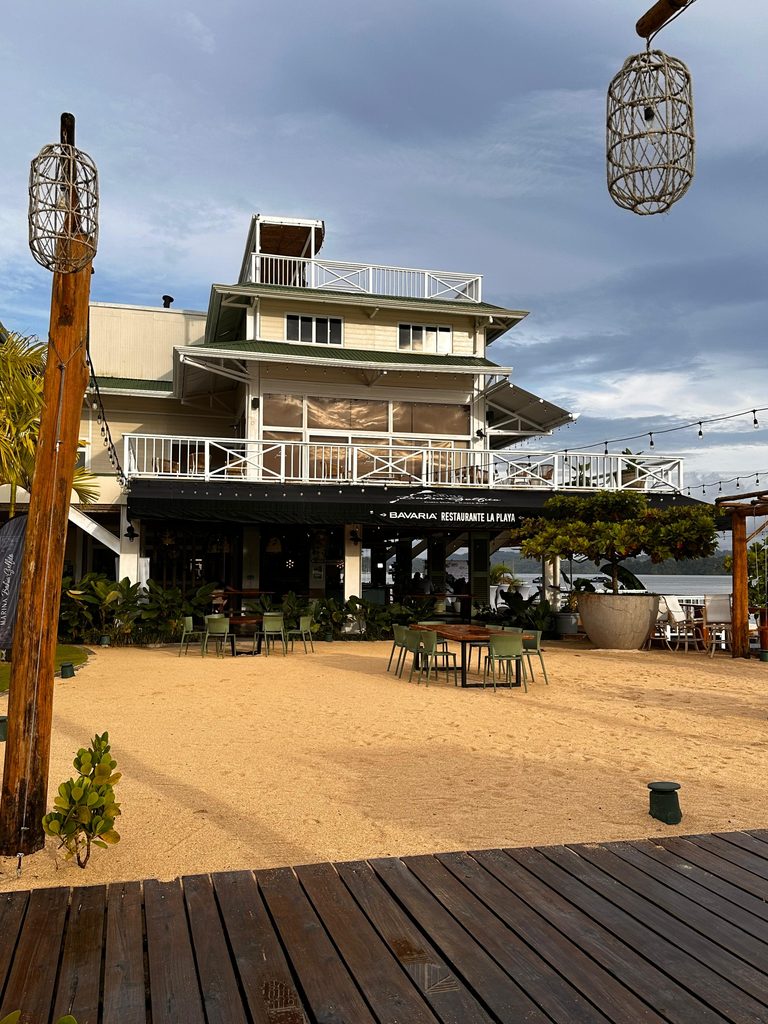
That combination is one of the things we like most about boating in Golfito. You can arrive at a modern marina with good facilities while still feeling remarkably close to a much wilder Costa Rica.
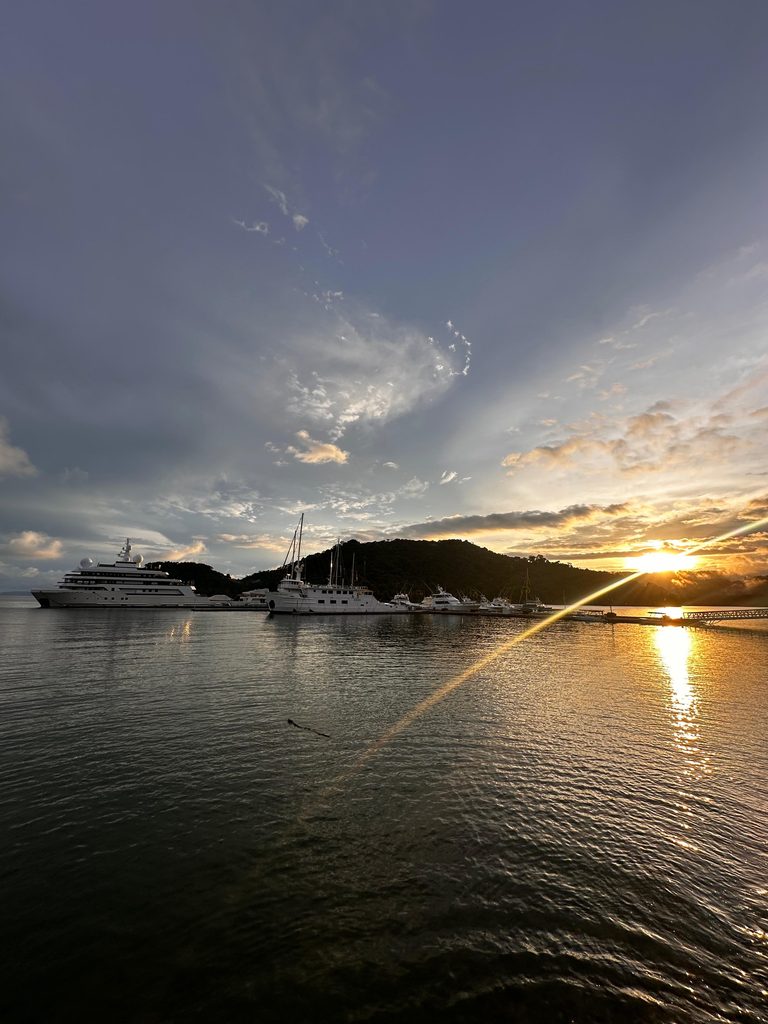
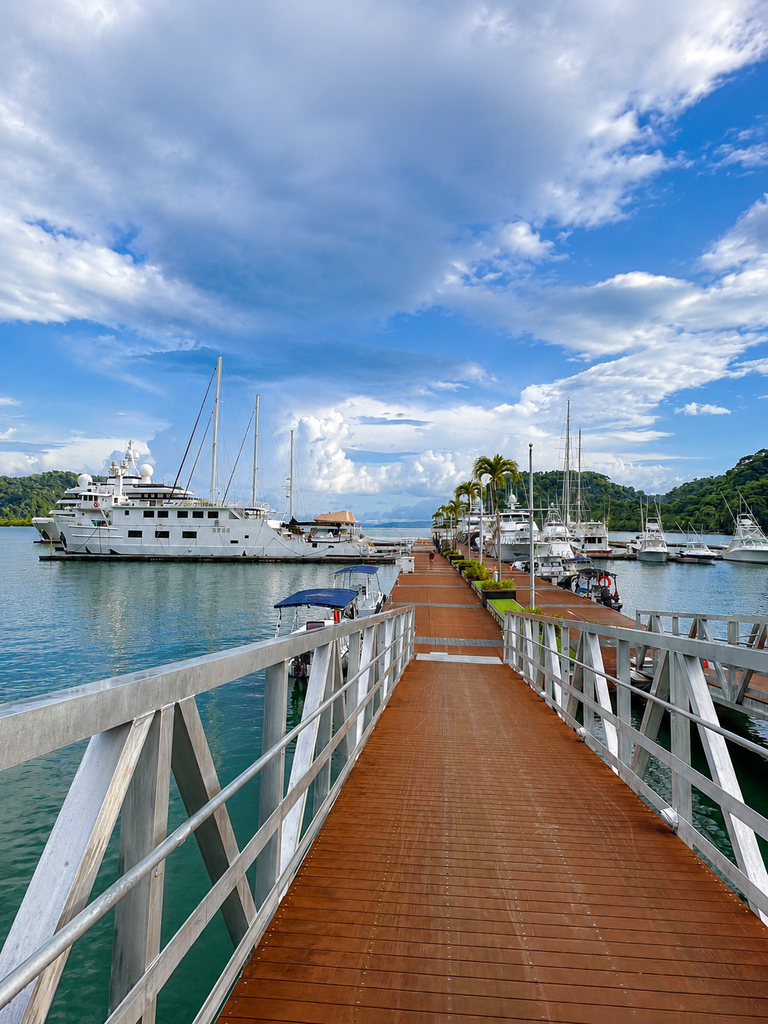
Marina Bahía Golfito is relatively small compared with some of the larger marinas in Costa Rica, but from our point of view, it is also one of the most beautiful. Around 65 people work at the marina, which gives it a surprisingly substantial operation for its size while maintaining a relaxed and personal atmosphere.
One of the details that immediately caught our attention was the water. Compared with many other marinas we have visited, the water around Marina Bahía Golfito looks remarkably clean. With the calm waters of Golfo Dulce, the surrounding green hills and rainforest almost reaching the shoreline, the marina feels much more connected to nature than most modern marina developments. If you are lucky, you may even see scarlet macaws flying overhead.
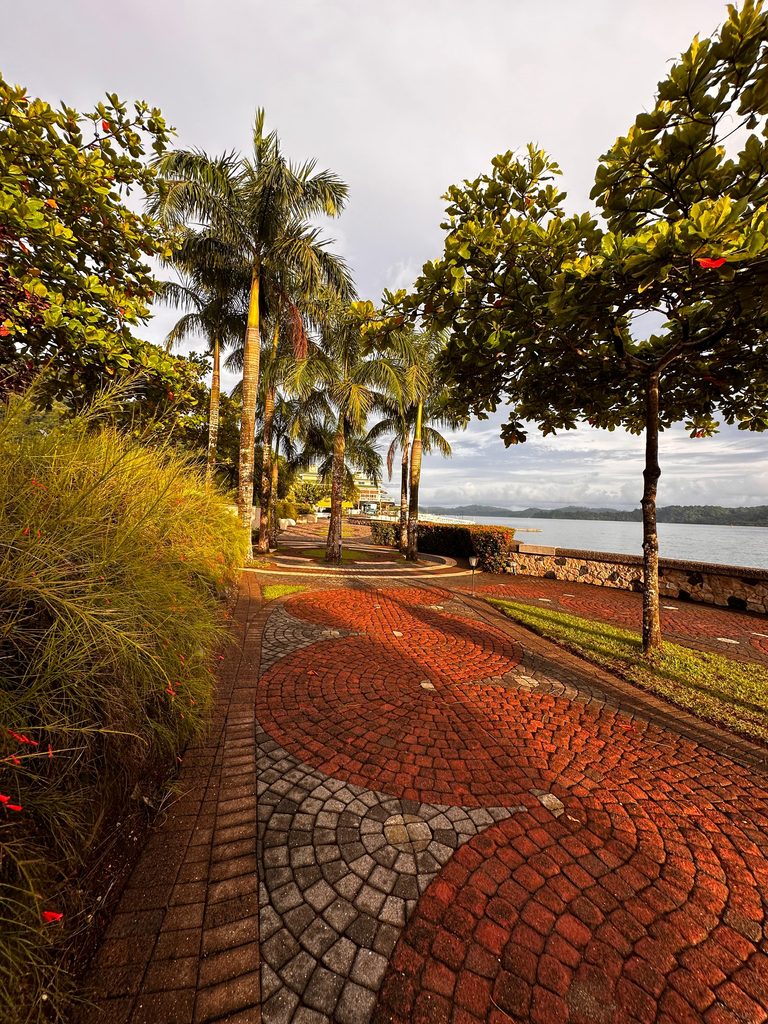
The marina also has its own hotel and several convenient services for visiting boaters and travelers, including a travel agency and a POPS ice cream shop.
La Playa restaurant is another nice feature of the marina. We found the food quite good, but what really makes the restaurant enjoyable is its waterfront setting. It faces directly onto Golfo Dulce, making it a pleasant place to have a meal while watching the marina and the surrounding landscape. The hotel is located on the second floor above the restaurant, with rooms also facing the water.
Road access to Marina Bahía Golfito has also improved. When driving from Chacarita on the Inter-American Highway, Golfito can now be reached via the route through La Gamba, which has recently been paved. This makes the marina more accessible by land for owners, crews and travelers arriving from other parts of Costa Rica.
From a boating perspective, Marina Bahía Golfito can accommodate yachts and large vessels and offers the services expected from a modern Costa Rica marina. One particularly useful feature for professional crews is its dedicated crew lounge, an amenity that is still relatively uncommon at marinas in the country.
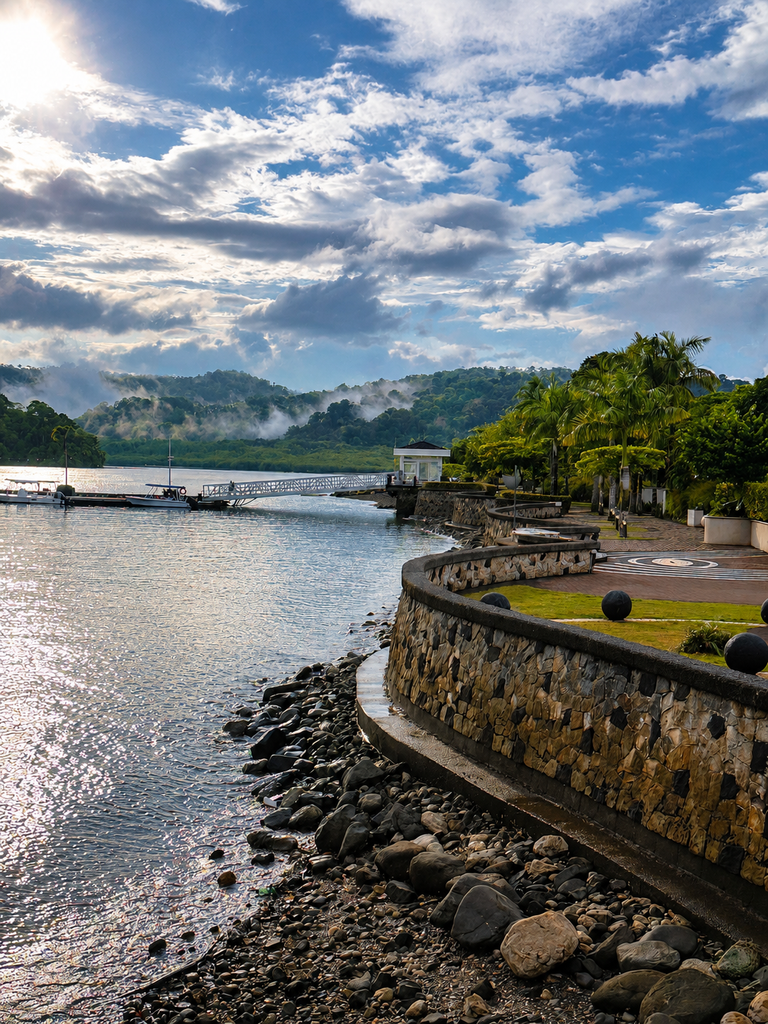
Another important detail for boat owners is how dockage rates work. Marina Bahía Golfito has different rates for high and low season. Based on the information we received directly at the marina, dockage can generally range from approximately $1 to $3 per foot per day, depending on the season, vessel and specific arrangement.
However, owners considering keeping a boat in Golfito for a longer period should not simply calculate an annual cost using the daily rate. It may be possible to negotiate a flat annual rate directly with the dockmaster. The final price depends on the vessel and the agreement reached with the marina, so long-term owners should speak directly with the dockmaster about the available options.
This can make Marina Bahía Golfito particularly interesting for boat owners looking for long-term dockage in Costa Rica or a base for exploring the Southern Pacific.
For cruising, Golfito is exceptionally well positioned. From here, boaters have access to Golfo Dulce and the remote Southern Pacific coast, including some of Costa Rica’s most biologically rich marine and coastal environments. The combination of protected waters, rainforest, wildlife and relatively limited coastal development gives this part of the country a character that is difficult to find elsewhere.
Golfito is also one of Costa Rica’s important sportfishing destinations, making the marina a practical base for fishing boats as well as cruising yachts and larger vessels.
What we personally like most about Marina Bahía Golfito is the balance. It has the infrastructure and services you expect from a modern marina, but it does not feel disconnected from its surroundings. The rainforest, clean-looking water, calm Golfo Dulce and occasional scarlet macaws overhead constantly remind you that you are still in one of the wildest corners of Costa Rica.
Best for: yachts and larger vessels, long-term dockage in Costa Rica, Southern Pacific cruising, Golfo Dulce exploration, sportfishing, nature-focused trips and boat owners looking for a smaller marina surrounded by an exceptionally beautiful natural environment.
Banana Bay Marina, Golfito
Banana Bay represents another side of Golfito.
It is smaller and more traditional than Marina Bahía Golfito and has long served cruising sailors, sportfishing boats and vessels traveling along the Pacific coast.
Its protected location inside Golfito Bay makes it an attractive stop for boats traveling between Costa Rica and Panama.
Banana Bay offers dockage, moorings, anchoring access, fuel, electricity, potable water, ice and a range of boat services. It is also a government-licensed marina capable of assisting international cruising vessels with entry and exit procedures.
Another important difference is cost.
Costa Rican marinas can be expensive, particularly the premium facilities. Golfito has traditionally provided some of the more economical alternatives, and Banana Bay is one of the few marinas that publicly displays straightforward dockage rates.
For cruising sailors who care more about protection, practical services and price than luxury surroundings, Banana Bay can make a lot of sense.
Best for: cruising sailboats, long-term stays, budget-conscious boat owners, sportfishing and vessels arriving from or continuing toward Panama.
Which Costa Rica Marina Is Best for Your Trip?
Choosing a marina should start with the experience—not the marina itself.
If you want to charter a sailboat or catamaran, we would normally start looking in Guanacaste, where both sailing conditions and boat availability tend to provide more options.
For sportfishing, Quepos and Golfito would be among our first considerations, with Los Sueños also having one of Costa Rica’s most established offshore fishing fleets.
For luxury yachts and superyachts, Marina Papagayo and Marina Bahía Golfito offer two very different experiences: one surrounded by the polished resort environment of northern Guanacaste and the other surrounded by the rainforest and protected waters of the Southern Pacific.
For access to both the Central and Southern Pacific, Quepos has perhaps the most strategic location.
And for maintenance and mechanical work, Puntarenas deserves more attention than it normally receives from tourists because of the city’s long connection with Costa Rica’s commercial fishing industry.
The best departure point for a private charter will also depend heavily on where you are staying. Driving several hours to reach a supposedly “better” marina rarely makes sense if an appropriate boat and itinerary are available closer to your hotel.
A Few Things Boat Owners Should Know About Costa Rican Marinas
If you are arriving with your own boat rather than booking a charter, the priorities change.
Reserve Ahead
Do not assume a slip will be available when you arrive.
Costa Rican marinas can fill up, so contacting them ahead of time is strongly recommended, particularly if you have a larger vessel or plan to stay for an extended period.
Where regulations and local conditions allow it, anchoring outside and going ashore by dinghy may sometimes provide an alternative while arranging dockage. Always confirm local restrictions and safe anchoring areas first.
Marinas Are Expensive
Compared with many other cruising destinations, marina costs in Costa Rica can be high.
Prices vary according to marina, vessel length, season and duration of stay, and many facilities provide rates only after receiving the vessel specifications.
Golfito tends to offer some of the more economical options.
If price matters, ask about monthly rates, moorings and anchoring services in addition to conventional wet slips.
Buy Your Provisions Outside the Marina
For normal food and supplies, we usually recommend going to a local supermarket.
Convenience purchases inside marina developments can be significantly more expensive. Use the marina for the things a marina does best—fuel, ice, shore power and marine services—and provision locally whenever practical.
Security Is Generally Excellent
One thing Costa Rican marinas do particularly well is security.
For boat owners who need to leave a vessel unattended for days or weeks, keeping it inside a marina is generally the safest option and provides considerably more peace of mind than leaving it anchored for extended periods.
For long-term storage, particularly through the rainy season, we would choose a marina.
Repairs Can Require Some Planning
Not every marina has a complete marine industry immediately outside its gates.
For mechanical work and sourcing parts, Puntarenas can be particularly useful because of the city’s large fishing industry and concentration of mechanics and workshops.
For specialized equipment, however, parts may still need to be sourced elsewhere or imported, so preventive maintenance before a long cruise is always a good idea.
What Costa Rican Marinas Do Well and What Is Still Missing
Costa Rica’s marina infrastructure has improved enormously.
The country now has facilities capable of handling everything from small recreational boats to superyachts, with good security, fuel, electricity and increasingly sophisticated yacht services.
But compared with major international cruising destinations, Costa Rica is still developing its broader marina culture.
Dedicated spaces for captains and crew to relax, work online or socialize are still not common, although facilities such as Marina Bahía Golfito have begun introducing crew lounges and more specialized services.
This evolution is encouraging. Costa Rica already has the coastline and natural attractions. Better marina infrastructure makes it increasingly realistic to explore that coastline by boat.
For Charter Guests, the Marina Is Only the Starting Point
For most travelers reading this guide, you probably do not need to choose a marina at all.
What you really need to choose is the experience.
Do you want to sail?
Fish offshore?
Spend the day with your family on a catamaran?
Explore remote beaches?
Snorkel?
Cruise aboard a motor yacht?
Or combine several of those things?
Once we know where you are staying, your group size, what you want to do, how long you want to spend on the water and your approximate budget, choosing the marina becomes much easier.
A marina is simply where the adventure begins.
Planning a Private Boat Charter in Costa Rica?
At Saltwater Connection, we do not believe the most expensive boat is automatically the best boat.
We start with your group and the experience you want to have.
Tell us where you are staying, how many people are traveling, what you would like to do and your approximate budget. From there, we can help identify the right area, marina and boat for your day on the Pacific.
Choose the experience first. Then choose the boat.
What is the best marina in Costa Rica?
There is no single best marina. Marina Papagayo stands out for luxury yachts and superyachts, Guanacaste offers excellent sailing and catamaran options, Quepos and Los Sueños are major sportfishing bases, and Golfito combines protected waters with access to Costa Rica’s wilder Southern Pacific.
Which Costa Rica marina is best for a catamaran charter?
Guanacaste is usually the first region we consider for sailing and catamaran charters because of the greater selection of vessels and generally more favorable sailing conditions.
Which marina is best for fishing in Costa Rica?
Quepos, Los Sueños and Golfito are all major sportfishing locations. The best choice depends on where you are staying, the season, target species and the type of fishing experience you want.
Which marina is best near Manuel Antonio?
Marina Pez Vela in Quepos is the primary marina serving Manuel Antonio and the surrounding Central Pacific region.
Can I leave my boat safely in a Costa Rican marina?
Costa Rica’s established marinas generally place a strong emphasis on security, and we consider a marina the safest option for leaving a vessel unattended or storing it for an extended period.
Should I reserve a marina slip before arriving in Costa Rica?
Yes. Availability can be limited, so contacting the marina in advance is strongly recommended, particularly for larger boats and longer stays.
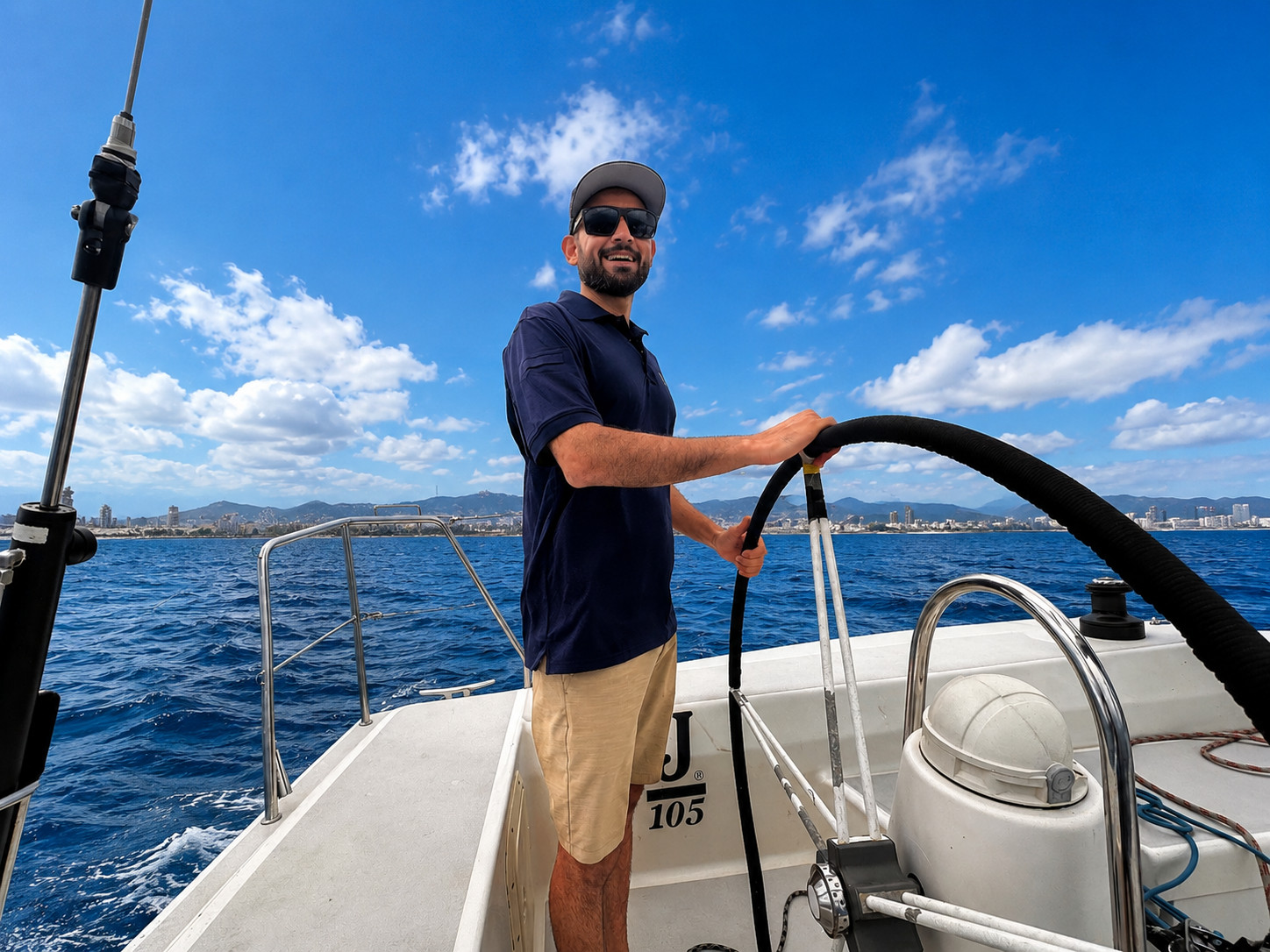
Costa Rican diving professional, sailor, and co-founder of Saltwater Connection. With 18+ years exploring Costa Rica’s coast and sailing different seas, he shares his passion for the ocean through authentic adventures.

